

A few weeks ago, I happened to come across a video of the famous evolutionary biologist Richard Dawkins being asked a simple yet profound question: “What if you’re wrong?”. It made me reflect on my own process of questioning and spiritual growth.
It was a question I had often asked myself as well. Since I first began questioning my religious upbringing, I wrestled with this thought. Discovering flaws and scandals within my religion deepened my sense of dread and hopelessness, ultimately reshaping my view of faith—a shift that continues to influence me today.
Hearing it posed so directly to someone like Dawkins, and listening to his response, felt like a validation of my own right to question. He emphasized how religious conviction is often shaped by cultural and geographical factors and I absolutely agree. As the famous atheist highlights the randomness of religious birth, my own journey led me to a similar kind of questioning.
The Paradox of Faith: One Purpose, Countless Paths
Humans are wired to seek answers, and in many ways, religion fulfills that need. It provides meaning, a moral compass, and an opportunity to build a community and social order.
There are thousands of religions worldwide, and even within Christianity, there exist tens of thousands of branches and denominations. The religious distribution is largely shaped by geography, culture, race, and migration. And this is precisely the core of Richard Dawkins’ argument that resonated so deeply with me—the undeniable randomness of birth and how it determines religious identity.
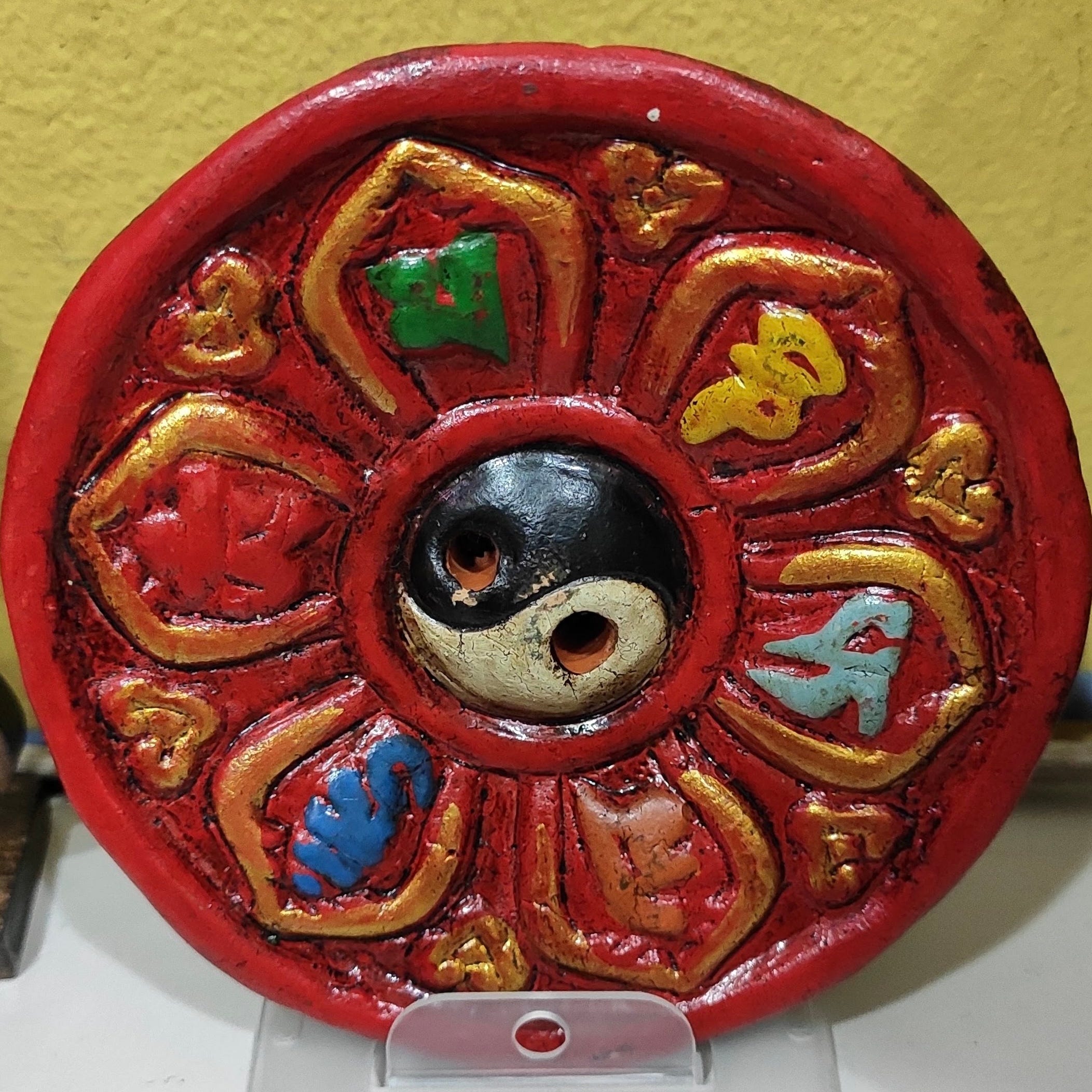
“But what if I had been born on the other side of the world?”
Had I been born in India, I might have first opened my eyes to the rhythmic chant of the Gayatri Mantra, whispered in devotion by my family.
In Saudi Arabia, my Muslim father would have whispered the Shahada into my ear at birth.
Or perhaps, if I had been raised in a small village in South Africa, an elder might have invoked the protection of our ancestors over me.
But my path was set when, as a baby, I was dressed in white, surrounded by a dozen godparents and blessed by an American Jesuit priest in a tiny Catholic church in my little town.
Groupish Righteousness
“Anything that binds people together into a moral matrix that glorifies the in-group while at the same time demonizing another group can lead to moralistic killing, and many religions are well suited for that task. Religion is therefore well suited to be the handmaiden of groupishness, tribalism, and nationalism.” - Jonathan Haidt
During one of the most polarizing presidential elections in our country’s history, I read Jonathan Haidt’s The Righteous Mind: Why Good People Are Divided by Politics and Religion. This book profoundly shaped my understanding of moral divisions and their roots in evolutionary psychology.
For the times that we feel so righteous, we often fall into the trap of moral superiority, giving sanctimonious opinions against people of other beliefs. This is rooted in our brains being programmed for group loyalty. We instinctively associate familiarity with goodness and see the unfamiliar as a potential threat. This phenomenon, known as “groupish righteousness,” often leads to exclusion, superiority complexes, and even hostility toward other groups.
Reading this made me pause and reflect on my own biases, especially amid the heated political climate I had witnessed. It was startling to realize how easy it was to fall into the trap of moral superiority, as I’ve certainly felt it myself. But morality is not absolute; it varies across cultures and even within societies. Recognizing this is crucial to fostering deeper understanding and true religious tolerance.
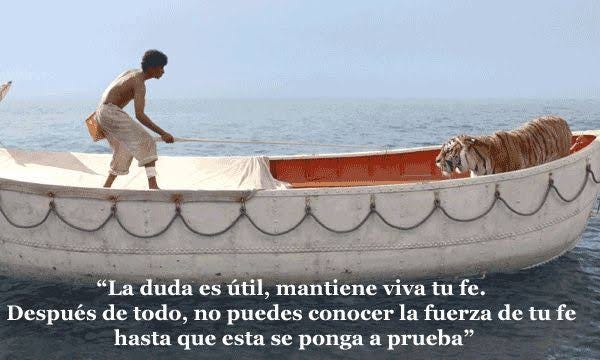
“What is the good of religion without personal spiritual direction?”
In The Road Less Traveled, M. Scott Peck says that every individual must walk their own journey in faith, and that path is often fraught with challenges and resistance. Yet, it is through confronting this resistance that we are humbled and come to a deeper understanding of both ourselves and the world around us.
To be absolutely certain of a religion you were simply born into feels like hubris to me. How can one be so sure of something they never had to question?
Being born into Catholicism and later choosing to remain within it now feels like a form of grace—not a dismissal of other paths, but rather a deeply personal journey toward finding meaning in something greater than myself. This unearned favor and love, through my chosen faith, sustains me in this life.
It’s not about certainty, and I’ve long let go of that pursuit. I’ve found peace in knowing that God’s love is beyond human comprehension—immeasurable, infinite, and deeply personal.
“For it is by grace you have been saved, through faith—and this is not from yourselves, it is the gift of God—not by works, so that no one can boast.”
— Ephesians 2:8-9
The True Measure of Belief
In the Bible, when Cain killed Abel and God asked him where his brother was, he responded, “Am I my brother’s keeper?” Yet the entire narrative of Scripture answers that question with a resounding yes.
Perhaps the true test of faith is not just in what we believe but in how we live out that belief, particularly in how we demonstrate love and compassion toward one another.
A faith clothed in humility and gratitude should unite, not divide. It recognizes our shared struggles and calls us to care for one another, rather than harm. Ultimately, the true measure of faith lies in being each other’s keeper.
But, much like the John Lennon’s song, I suppose for now we can only imagine such a world.

“You will know them by their fruits” popped into my head. I’m not a religious person, but I don’t need to be to find truth in that. This is a really good essay I enjoyed it.
Thank you for sharing your thoughts on religion and the varieties of religious experience. I know you mention we are wired to seek answers and I believe that is true. However, I often find my focus is on asking the right questions. The expression "we don't know what we don't know" comes to mind. Years ago, my sons had the opportunity to experience first-hand 15-20 different religions through visits to churches, monasteries, mosques, and temples. They found that to be quite meaningful.