

I had skin and bronchial asthma since I was very young. Skinny and scarred, I got teased a lot. Children can be cruel, sometimes. And maybe that memory started the disconnect with my own body I had to deal with years after.
I did not like how I looked. It didn’t help that outside of school days in uniform, I had no sense of fashion whatsoever. One of the surviving photos in our old family album is a full-body picture of me during a field trip to the city: in my short bob and awkward bangs pinned to the side, wearing a pale tangerine turtleneck. I’ve got on blue flared jeans and my shiny black (school!) shoes. The cherry on top is my blue-tinted sunglasses. Omg.
How was it that my classmates changed so much every summer break? One showed up with longer hair that suited them, another had somehow changed shape. But then there was me, arriving in my baggy T-shirt and jeans, still skinny, still looking like a schoolboy.
There’s a book called The Summer I Turned Pretty. Mine would be called something else entirely.
At one point in high school, the girls were asked to wear tank tops and shorts while dancing to “The Tide Is High.” I can still remember how badly I wanted the ground to just swallow me whole. I’m pretty sure I couldn’t hate school more after that.
I felt like one of the nobodies. We don’t get Valentine’s Day greetings over the campus speakers. We don’t get the paper flowers passed around in class.
Years later, when I started working, there was this girl who looked perfect—tall, pretty, fair. She had a boyfriend who occasionally came to the office, and they would leave with him carrying her bag. I always thought she deserved that kind of love because she was pretty.
One time, I went to a cheap salon and ended up with the most hideous bangs. I thought I looked terrible. But the following week, the pretty girl showed up at work wearing bangs, too. She said she got inspired by mine!
Hers look a lot better, I thought. That’s exactly how bangs should make someone look. But if it hadn’t looked okay in me, would she have copied it?
Beauty isn’t just what you look like. It’s what people are prepared to see.
It’s the same hairstyle, but my perception of beauty made a lot of difference. And mine was still shaped by insecurity.
After some time, the late-adolescence hormones finally kicked in. And I experienced the shift: the more attention I received, the more unpleasant interactions came with it—unwanted advances, constant badgering, creepy stalking.
I spent my adolescence wanting to be seen. Then I was. And I understood for the first time what I’d been asking for.
I had to run through school hallways avoiding another student who stared at me as though I were naked. He even tried to grab my hand, and his touch felt terrible on my skin. That wasn’t the worst of it, and I don’t think I’m ready to talk about that yet.
Attention can be seductive. When you’re young and struggling to build your sense of self, you yearn for it. But for a woman, once you have it, you need to learn your way around it.
Years back, I couldn’t get rid of this guy who kept coming to my house. My parents made me attend to him each time, considering him as a “guest” I needed to accommodate. I told him I was already seeing someone, and he did not seem to believe it. It scared me when he came to a family function and stayed longer than necessary. He sat there alone in the midst of empty seats, waiting for me. And when I called my then-boyfriend for help, he just laughed it off.
Needless to say, it broke us apart.
Shortly after, I dated another man. I was convinced to keep my hair long, my nails bare, and my clothing plain and modest. This is the kind of woman who wins the favor of the Lord, he said. It’s virtuous, apparently. So I got the silent treatment whenever I disobeyed.
I got interrogated for getting attention elsewhere. It was as though being seen was my fault. What was I wearing? What did I say? Then silence.
He’s seen me. That’s enough. I should remain invisible to the rest of the world.
I’m not sure I could even call it that. It might not simply be invisibility he demanded. Instead, maybe he had seen me too specifically. He curated my appearance for the wrong reasons, as though my beauty was something that belonged to him.
With strangers, I could walk away. With a boyfriend who laughed about my stalker, I eventually left. But with someone who controlled my haircut—that’s someone who made me believe the control was love. And for a long while, I believed it.
I’ve grown older, and in all those years I was constantly torn between being seen and being consumed.
I remember this trip I took some time after.
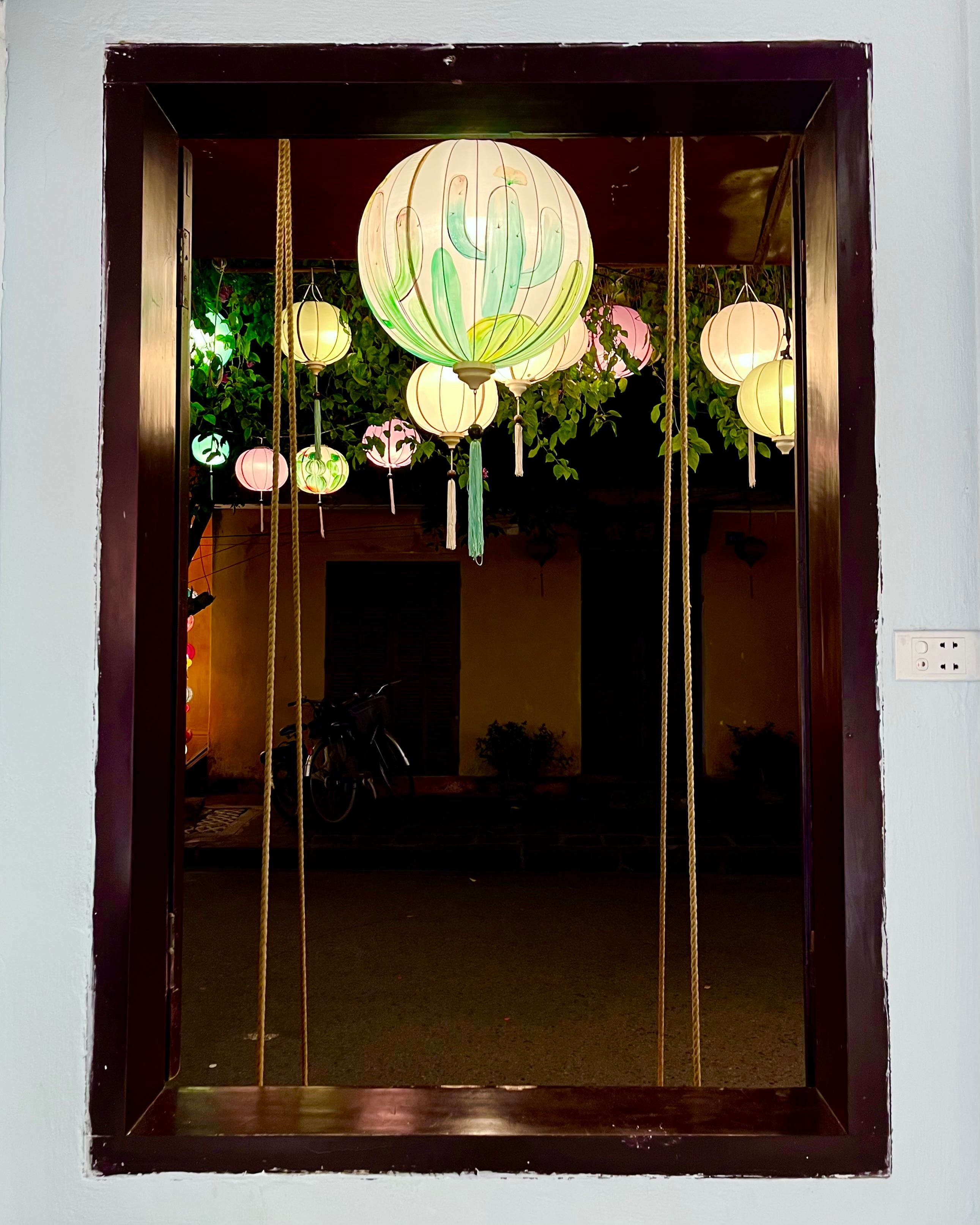
I was in Hoi An and was heartbroken to find the riverside area lined with restaurants with live music that echoed across the historic old town. Tourists bring in so much money, but also the chaos of the cities they came from. The floating lanterns were still there, but they looked drowned out by the LED lights reflecting on the water.
When you’re seen, you don’t get to choose whose attention you get. There are people who simply want to witness you respectfully, and there are others who can’t help but disrupt it.
I no longer believe that a woman being seen requires reciprocity. My past relationship left me with a sense of entitlement dressed up as love. I don’t believe in that anymore. You wanting to see me doesn’t mean I should let you in. I will unlatch my door only if I want to, because not everyone deserves a spot on my couch, let alone in my bed.
I was never the prettiest woman in the room. I was never invisible either. That in-between taught me everything.

I was never invisible, neither in my teens nor in my twenties, so this post hits home. When you get unwanted attention and unwanted glances, you often find yourself looking for a place to hide.
Gen, being accepted by someone and allowing someone to control your life are two completely different things. Your essay reminded me of that. 😇